

iDX HPV-14 Genotyping Max (14 High-Risk Genotypes)
1. Zero-Pool Individual Genotyping
While many labs offer pooled results for high-risk HPV, iDX provides specific identification of all 14 high-risk genotypes (16, 18, 31, 33, 35, 39, 45, 51, 52, 56, 58, 59, 66, and 68). This allows clinicians to track persistent, type-specific infections with absolute clarity.
2. Ultra-High Analytical Sensitivity
Our iDX protocol is powered by a system with a Limit of Detection (LoD) of 42 IU/mL. This ensures that even low-level viral infections—often missed by standard screening tests—are caught early for better patient management.
3. Human-Verified Quality Control
We go beyond simple internal controls. iDX utilizes the Human RNase P gene as an internal verification for every sample. This confirms that enough human cellular material was collected and that the extraction was successful, providing 100% confidence in every negative result.
HPV Gene Coverage
Zero-Pool individual identification for the "WHO-defined" core group of high-risk genotypes.
14 High Risk HPV genotypes detected
- HPV 16
- HPV 18
- HPV 31
- HPV 33
- HPV 35
- HPV 39
- HPV 45
- HPV 51
- HPV 52
- HPV 56
- HPV 58
- HPV 59
- HPV 66
- HPV 68


Working Hours: Monday-Saturday, 9:00 AM - 7:00 PM
iDX HPV-14 Genotyping:
This is a precision tool. Instead of just saying "you have a high-risk type," it tells you exactly which one. This is crucial because persistent infection with the same type (e.g., HPV 16) over several years is the main driver of cervical cancer risk.
Genotyping (14 Types):
Targets the "WHO-defined" core group of high-risk genotypes responsible for the vast majority of cervical cancers. It trades the extra rare/low-risk types for the ability to definitively name each of the 14 most dangerous ones.
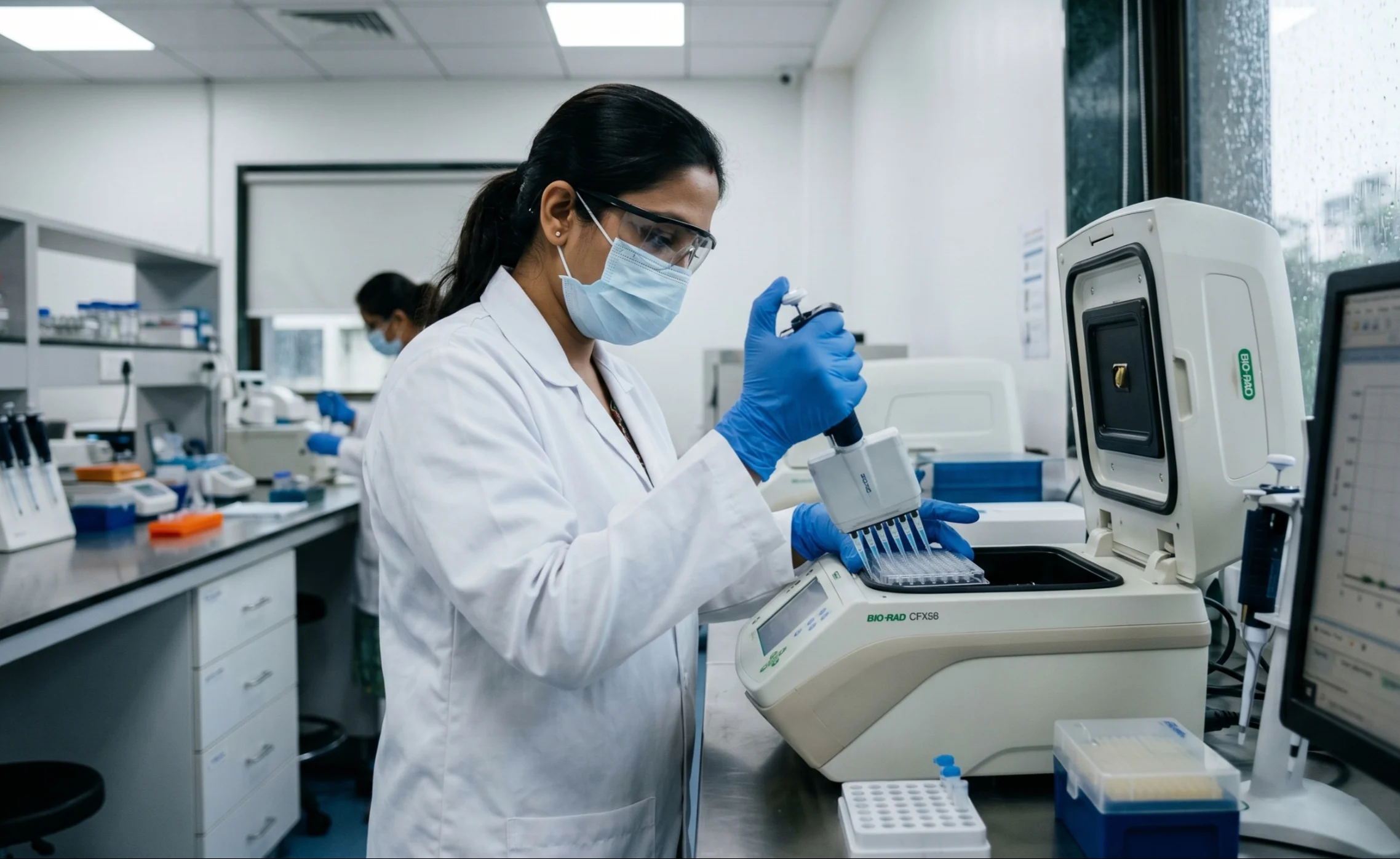
Clinical Diagnostic Process
Uses the Human RNase P gene as an internal verification for 100% confidence in every result.
Why Choose iDX HPV-14 Genotyping Max
- Zero-Pool individual genotyping (not pooled)
- Ultra-High Analytical Sensitivity (42 IU/mL)
- Human-Verified Quality Control (RNase P)
- Definitively identifies the 14 most dangerous strains
Your questions, answered clearly
It means we identify each strain individually rather than just grouping them as a "positive" result.
By allowing clinicians to track if a specific high-risk strain is persisting over time.
A cervical or urethral swab sample is used for precise analysis.